
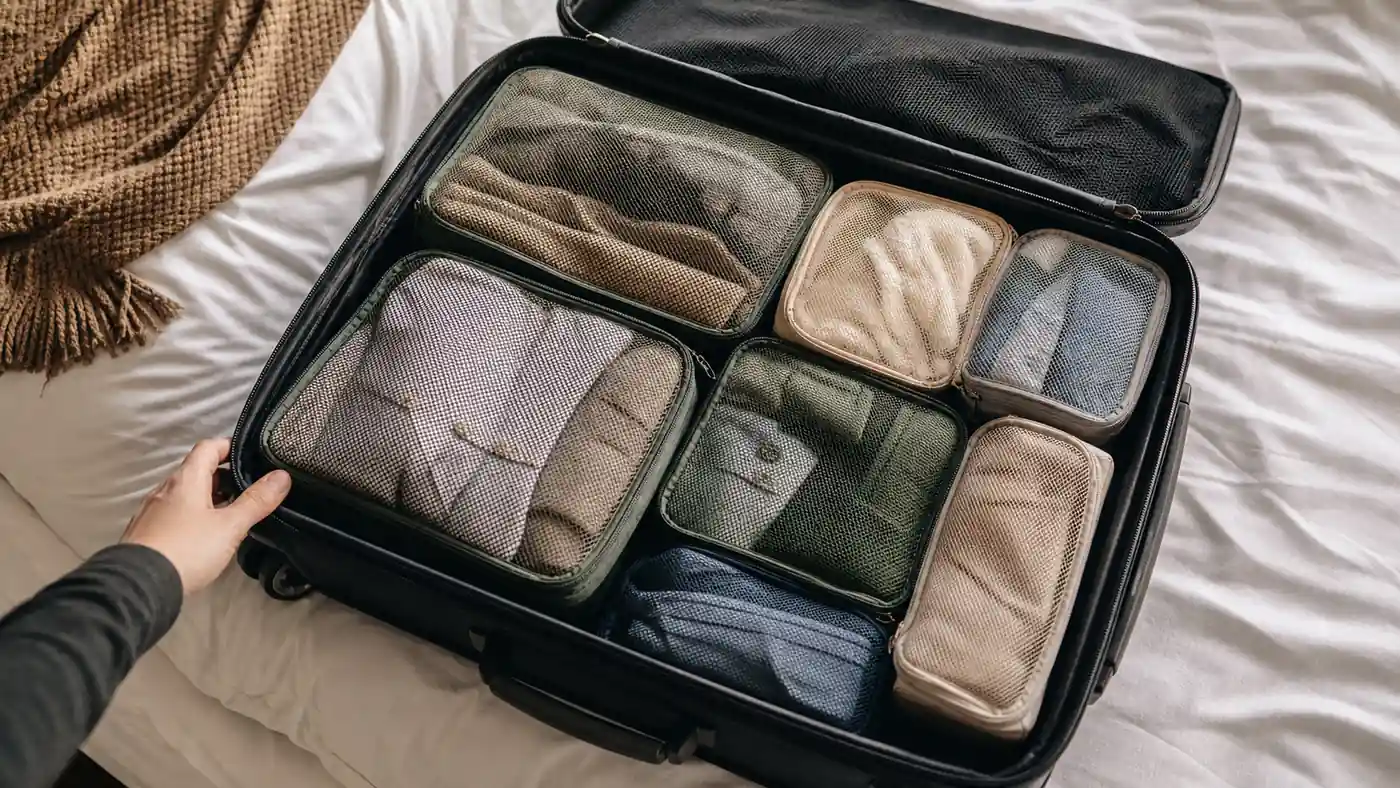
Packing cubes are one of those products every travel blog recommends and almost none of them explain why. "They keep you organized" is true but useless. It doesn't tell you what actually breaks on a cheap set after month three, or why a full suitcase with cubes closes easier than one without. We've run the same BAGAIL 8 Set Packing Cubes through more than a dozen round trips, from carry-on weekend hops to three-week backpacking stretches, and the reasons they're worth buying turned out to be a lot more specific than the marketing copy suggests.
None of these ten reasons are theoretical. Each one is something that happened, repeatedly, across enough trips with the same BAGAIL set that it stopped being a coincidence and started being a pattern worth writing down. A cheaper set might replicate one or two of these. It's holding onto all ten across dozens of trips that actually separates a set worth buying from one you'll be replacing by next summer.
The set that made every trip after it easier to pack
BAGAIL's 8-piece set covers everything from a weekend duffel to a three-week suitcase, and it's held its zippers and mesh through more trips than most people take in a year.
Amazon Check Today's Price on Amazon →You stop unpacking your whole suitcase to find one shirt
Without cubes, finding the one t-shirt buried at the bottom means lifting out everything on top of it, then repacking it all the same way you found it. With a set of BAGAIL cubes sorted by category, tops in one, bottoms in another, underwear and cables in the small ones, you unzip a single cube and you're done in seconds. On a two-week trip that's the difference between a 15-second grab every morning and a five-minute excavation that leaves the rest of the suitcase a mess you have to fix before you can leave the room.
The compression actually buys you real suitcase space
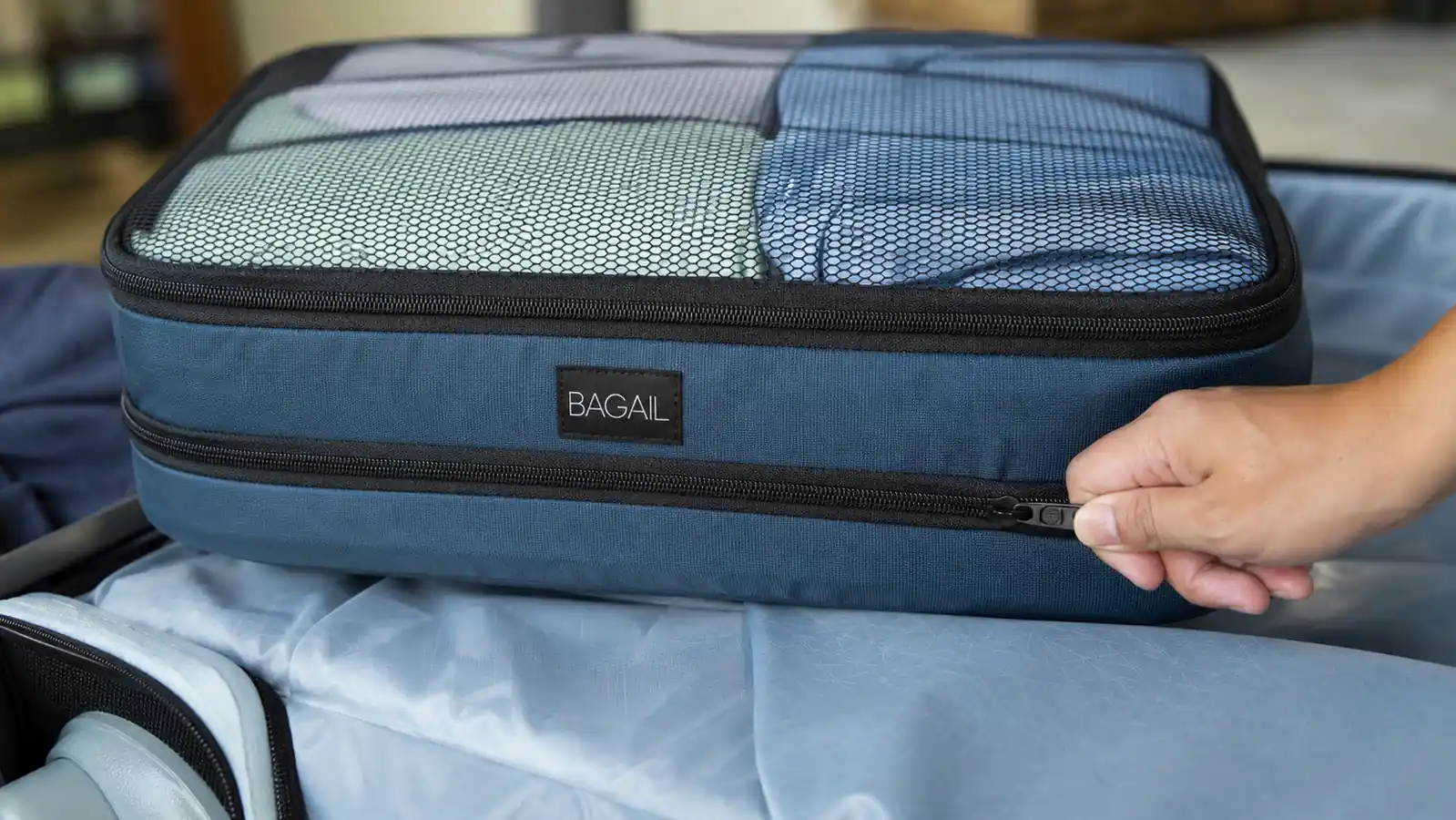
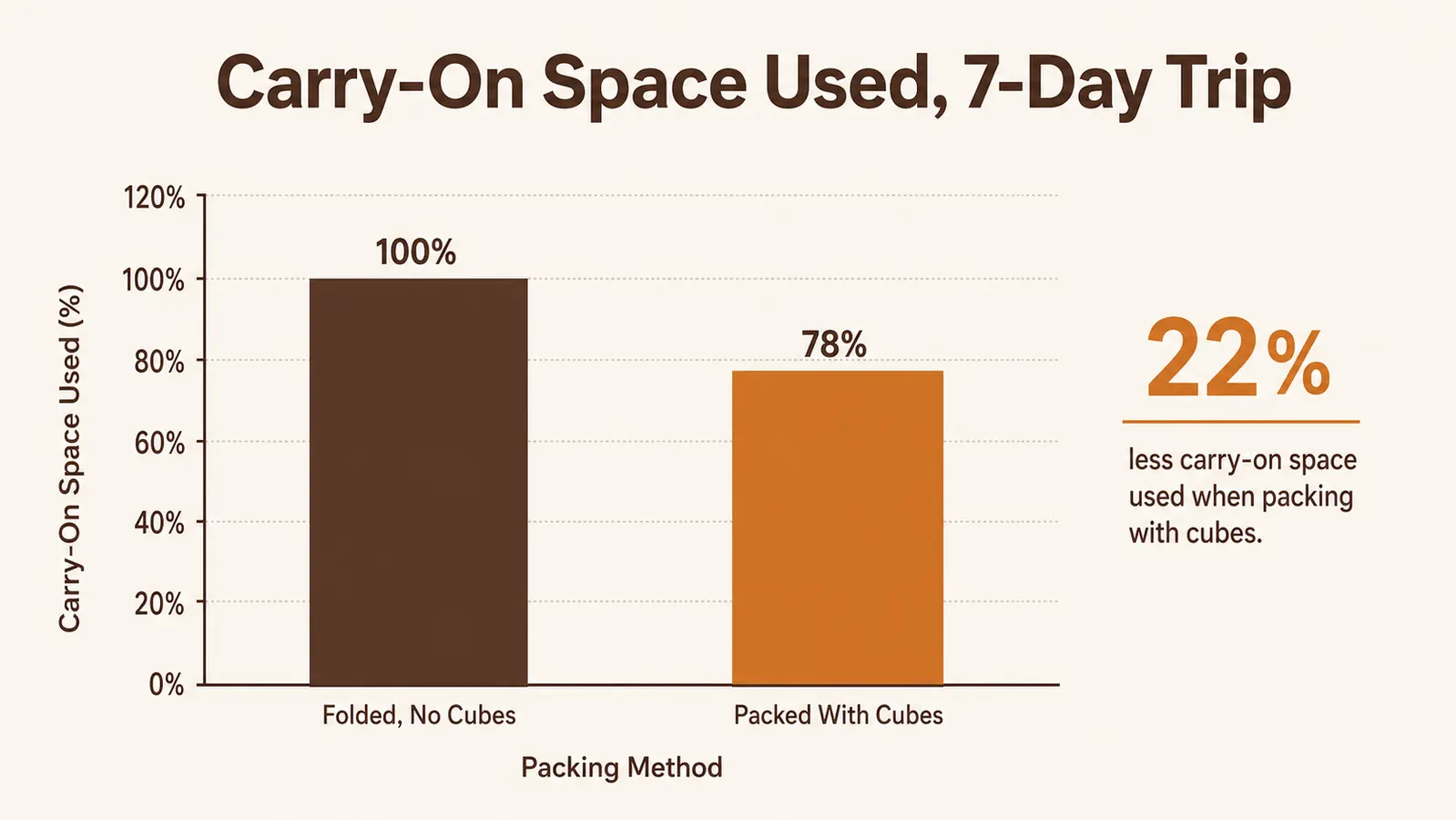
Each BAGAIL cube has two zippers, an outer one that closes the cube and an inner one that compresses the contents down after it's already zipped shut. Flattening a cube of folded shirts this way shrinks it by roughly a fifth compared to the same shirts just zipped in loose. Across a full 8-piece set on a week-long trip, that's the margin between a carry-on that zips shut without a fight and one you're kneeling on in a hotel hallway trying to force closed.
Repacking after a hotel stay takes minutes, not an hour
The worst part of a multi-stop trip isn't packing once, it's repacking every two or three days as you move between hotels or cities. When clothes are loose, that means refolding everything from scratch each time, usually on a hotel bed with a checkout clock running. When they're already sorted into cubes, you just pull the used ones out, drop fresh laundry back in the same cube, and zip it shut again. What used to be a 45-minute chore drops to under 10 minutes, and it stays that way for every stop on the rest of the trip, not just the first one.
Dirty and clean clothes actually stay separated
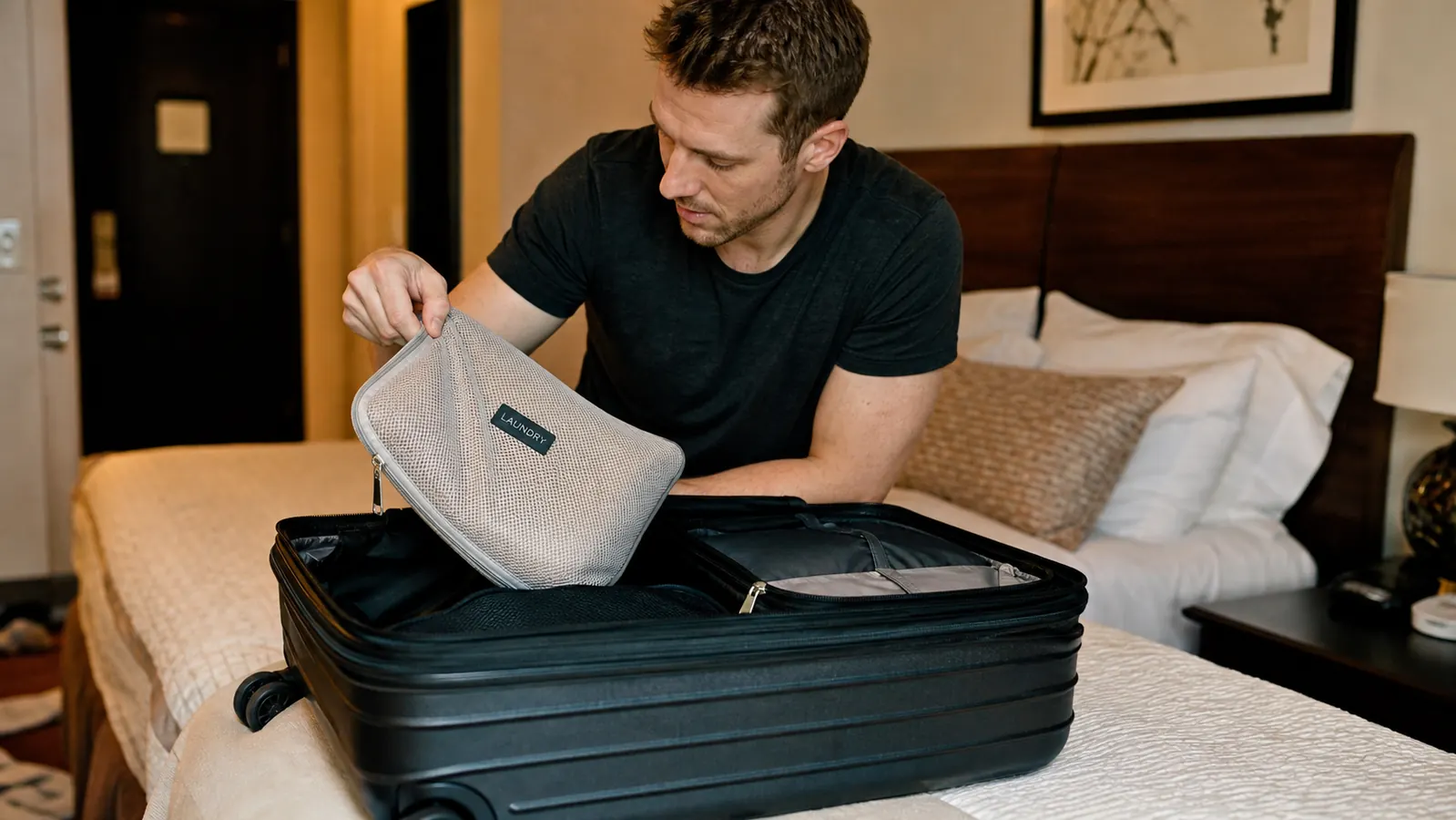
A dedicated laundry cube sounds like a small thing until you've dug a wrinkled clean shirt out from under a pile of worn socks at a wedding you're already running late for. Set aside one BAGAIL cube on day one purely for worn clothes and the rest of the suitcase stays untouched by it. It's a one-time decision on the first morning of the trip that pays off every single day after.
Security bin checks go faster because nothing spills
Pulling a laptop and toiletries out of an otherwise-loose bag at TSA usually means everything else shifts and half-spills into the bin behind you, and then you're repacking a mess while the line backs up. Cubes keep the rest of the suitcase's contents locked in place while you dig for the one item the agent wants to see, so the bag goes back together the same way it came apart.
Wrinkles show up less because clothes stop shifting mid-flight
Loose clothes slide around a suitcase every time it's tossed, tilted, or stacked in cargo, and that constant shifting is what creates deep wrinkles by the time you land and unzip the bag. Clothes packed flat inside a zipped cube can't move the same way, so they arrive folded closer to how they went in eight hours earlier. It's not a substitute for a garment bag on a suit or dress, but for everyday shirts and pants it noticeably cuts down on the ironing or steaming you have to do at the other end before you can even leave the hotel room.
The mesh panels hold up to real wear, not just gentle use
Cheaper cube sets tend to split their mesh seams or snag zipper teeth within a couple of trips, usually right when you're relying on them the most. The BAGAIL set uses a denser mesh weave and reinforced zipper pulls that have survived being crammed into overhead bins, sat on to force a suitcase shut, and run through the wash more than once without the seams giving out. That durability, not the organizing itself, is the real test of whether a $25 product is worth buying once or twice a year.
Different sizes in one set means you're not overpacking a bag to fill it
An 8-piece set gives you small cubes for socks and cables, medium cubes for shirts, and large cubes for bulkier items like jeans or a light jacket. That range means you can pack exactly what a specific trip needs instead of stuffing one oversized bag with air just because it's the only size you own. Smaller weekend trips use fewer, smaller cubes, and the larger ones stay home in the closet until you need them.
Switching suitcases or bags takes minutes, not a full repack
Because clothes are already sorted into cubes rather than loose, moving from a checked bag to a carry-on, or from a suitcase to a duffel for a side trip, is just a matter of transferring the cubes over as complete units. You're not refolding or re-sorting anything mid-trip, just relocating already-organized cubes into a different shell. Anyone who's had to gate-check a bag at the last minute knows exactly how much that shortcut matters when you've got two minutes before boarding.
They pay for themselves faster than most travel gear
At current pricing, an 8-piece BAGAIL set works out to a few dollars per cube, and a set used regularly for a year or two costs less per trip than a single bad hotel laundry bill or a replacement shirt bought because the original got crushed and stained in transit. Compared to travel gear that gets used once on a trip and forgotten in a closet, packing cubes are one of the few purchases that gets used on every single trip that follows the first one.
What I'd Skip
Not every packing cube feature is worth paying extra for. Skip sets that only come in one size, since the entire point is matching cube size to what you're actually packing that trip. Skip anything with a flimsy single zipper and no compression option, since that's the whole mechanical advantage over a plain packing pouch or a gallon bag. And don't buy a huge 12 or 14-piece set expecting to use all of them on a normal trip, since most of it will just sit in a drawer unused. Most travelers land on using 5 to 6 cubes from an 8-piece BAGAIL set on a regular basis, with the rest reserved for longer trips, bulkier cold-weather clothing, or a second traveler sharing the same suitcase.
The real test isn't whether cubes keep a suitcase tidy on the way out the door. It's whether the zippers and mesh are still intact on trip number twelve.
Pack once, repack in minutes for the rest of the trip
The BAGAIL 8 Set has held up through repeated round trips without a torn seam or a stuck zipper. Check today's price before your next trip.
Amazon Check Today's Price on Amazon →