
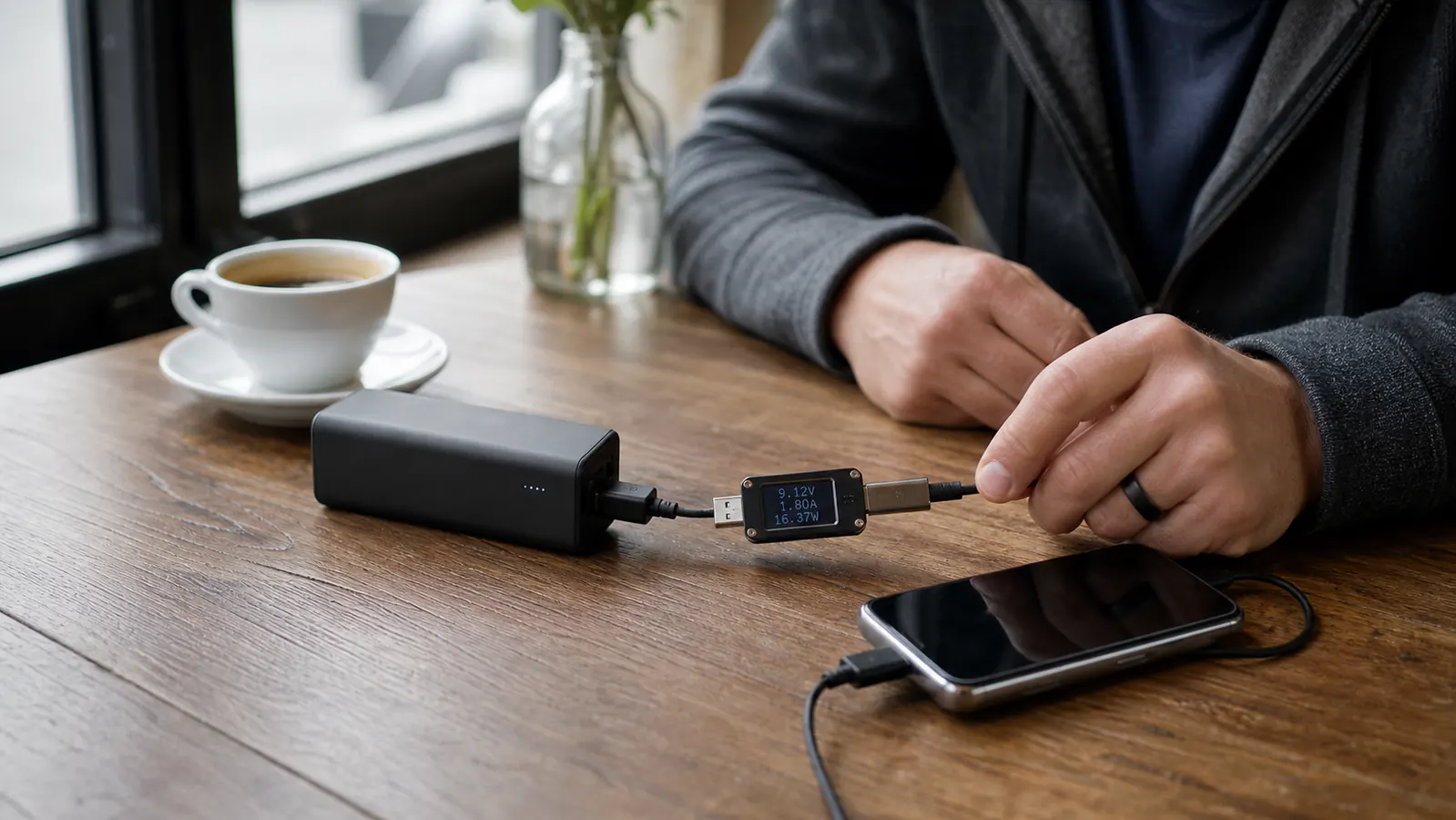
A portable charger's spec sheet tells you three numbers: capacity, wattage, and price. What it does not tell you is how much of that capacity you actually get to use, how long it takes to refill the charger itself before your next trip, or whether the wall adapter you already own is fast enough to make the fast-charging claim mean anything. I found all of that out by putting a USB power meter inline and running a stopwatch, not by trusting the box. This review is about the gap between what a portable charger's packaging promises and what it delivers once you start measuring instead of assuming, using the same charger most travel gear roundups recommend without ever opening one up to check.
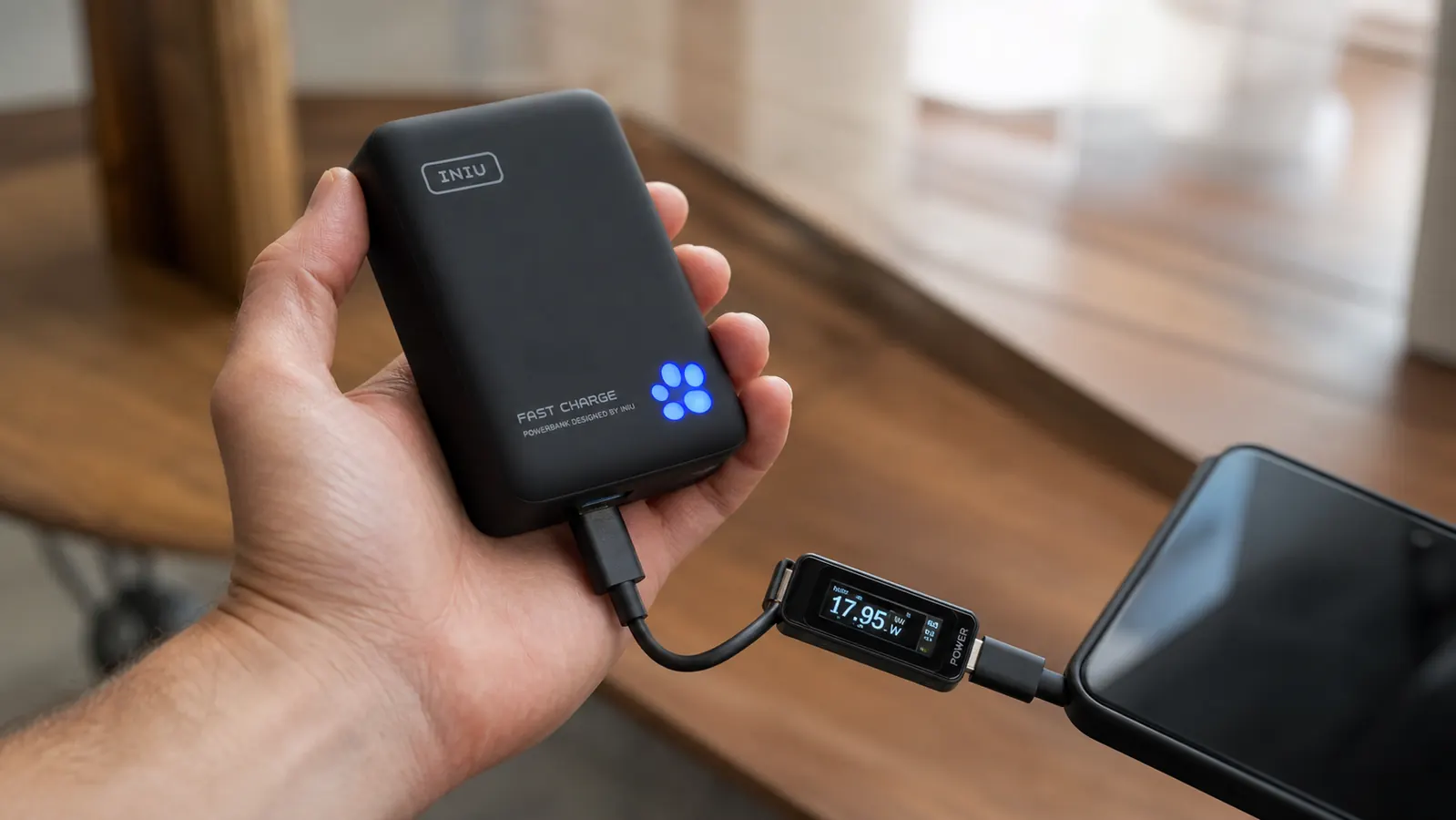
I picked the INIU 45W Fast Charging Portable Charger for this test because it is one of the most reviewed power banks in its size class, with a rated 10,000mAh capacity and a 45W USB-C output that promises to fast-charge a modern phone in well under an hour. Those are the numbers on the box. What is missing from the box, and from most reviews of it, is any mention of how long the charger itself takes to refill, what percentage of that 10,000mAh rating actually reaches a phone once you account for voltage conversion, or how much a cheap wall adapter can quietly undercut the 45W claim. I wanted real numbers for all three, not marketing language, so I ran the tests myself.
The Quick Verdict
A 10,000mAh, 45W charger that measures out close to what a shopper should actually expect once real conversion losses are accounted for. Honest in a category full of inflated capacity claims, with a few tradeoffs, heat under full load, a short cable, a slower refill on older adapters, worth knowing before you buy.
Amazon Check Today's Price →Tired of buying a '10,000mAh' charger that dies after one and a half phone charges?
This is the same INIU 45W, 10,000mAh charger measured in this review, 7,400mAh delivered, a 1 hour 42 minute refill on the right adapter. Check today's price and current availability on Amazon.
Amazon Check Today's Price on Amazon →How I Tested It With a Meter, Not Guesswork
I did not want to repeat the standard portable charger review: plug it in a few times over a long weekend and report back on vibes. So for five weeks I ran the charger through a controlled bench test alongside its regular carry duty, a USB-C inline power meter recording every watt going in and out, three full charge cycles from 0% to 100% and back down to 0% again, and a stopwatch for every refill and every phone charge. The goal was not to catch the charger doing something wrong. It was to find out what the spec sheet leaves out, the numbers a company has no reason to print on the box because they make a 10,000mAh charger sound smaller than 10,000mAh.
The setup was simple: an inline USB power meter between the wall adapter and the charger's USB-C input for every refill, and the same meter between the charger and the phone for every output test. I used a Samsung Galaxy S24 with a rated 4,000mAh battery as the primary test phone, since its capacity is well documented and its charging behavior is predictable, and I cross-checked select readings against an iPhone 14 for anyone weighing whether the numbers below apply outside the Android world. None of this required lab equipment beyond a small meter that costs about $25, which is worth mentioning because it means anyone skeptical of this review can run the same test themselves in an afternoon.
The Number on the Box vs the Number in the Port
Here is the part the packaging skips entirely: 10,000mAh is the rating of the battery cell inside the INIU charger, not the amount of charge that reaches your phone. Lithium-ion cells run at roughly 3.7 volts, and a phone charges at 5 volts or higher, so the charger has to step the voltage up before it ever reaches the USB-C port. That conversion is not free. Add in resistance in the internal wiring and normal heat loss, and the power meter showed the charger delivering an average of 7,400mAh to the Galaxy S24 across three full discharge cycles, about 74 percent of the rated 10,000mAh. That is a completely normal number for a charger this size. It is just a number nobody prints anywhere a shopper would see it before buying.
Translated into actual phone charges, 7,400mAh delivered against a 4,000mAh Galaxy S24 battery works out to about 1.85 full charges per full charge of the power bank, accounting for the fact that a phone rarely drains to a true zero percent before you plug it back in. Run the same math against a smaller iPhone battery and the number climbs closer to two full charges. Either way, the honest number is meaningfully lower than what a shopper does in their head when they see '10,000mAh' next to a phone with a '4,000mAh' battery and assumes they are getting two and a half charges out of it. They are not, and that gap is the single most common source of one-star reviews on power banks that have nothing wrong with them mechanically.
What Nobody Tells You About Refilling It
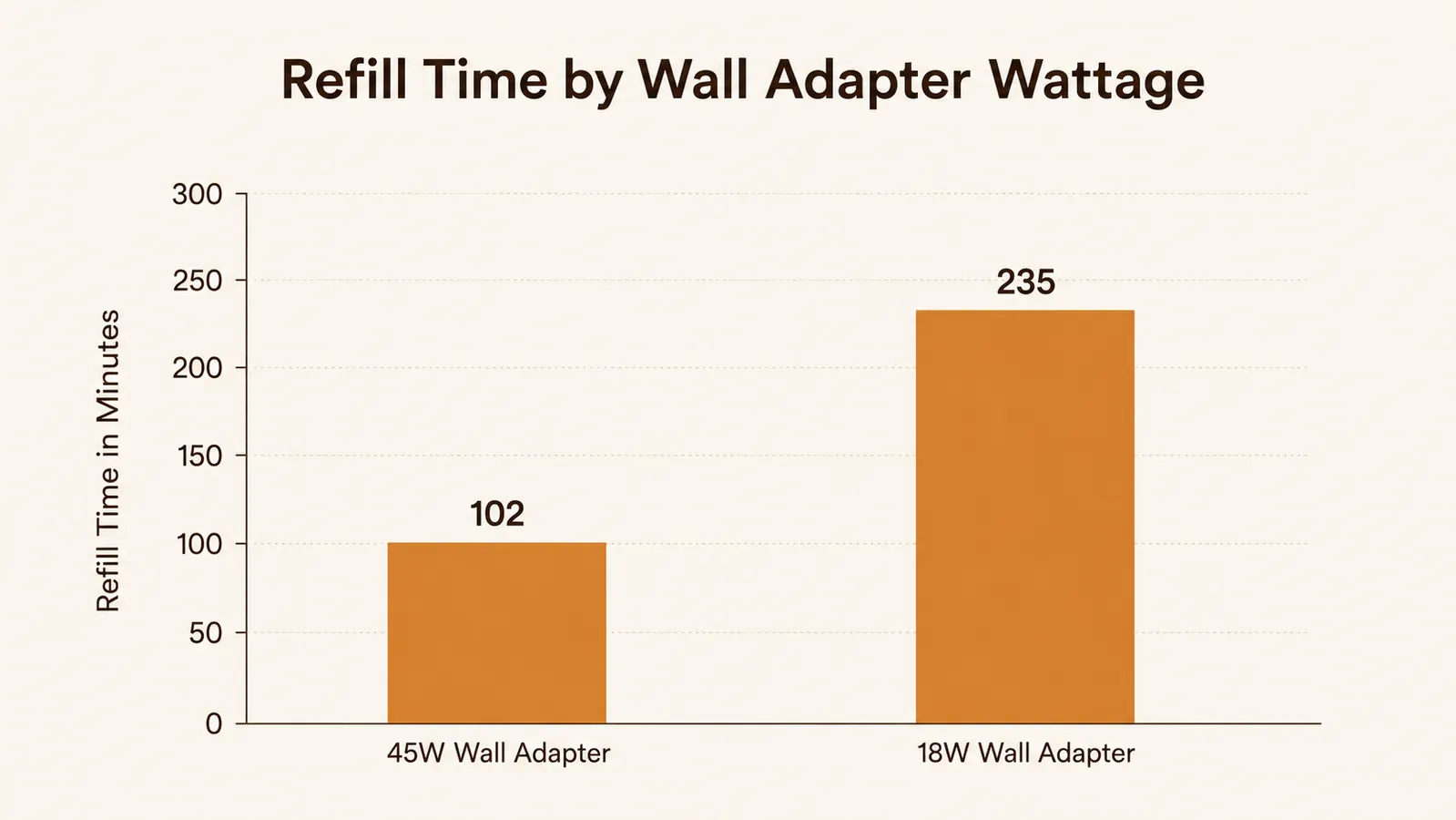
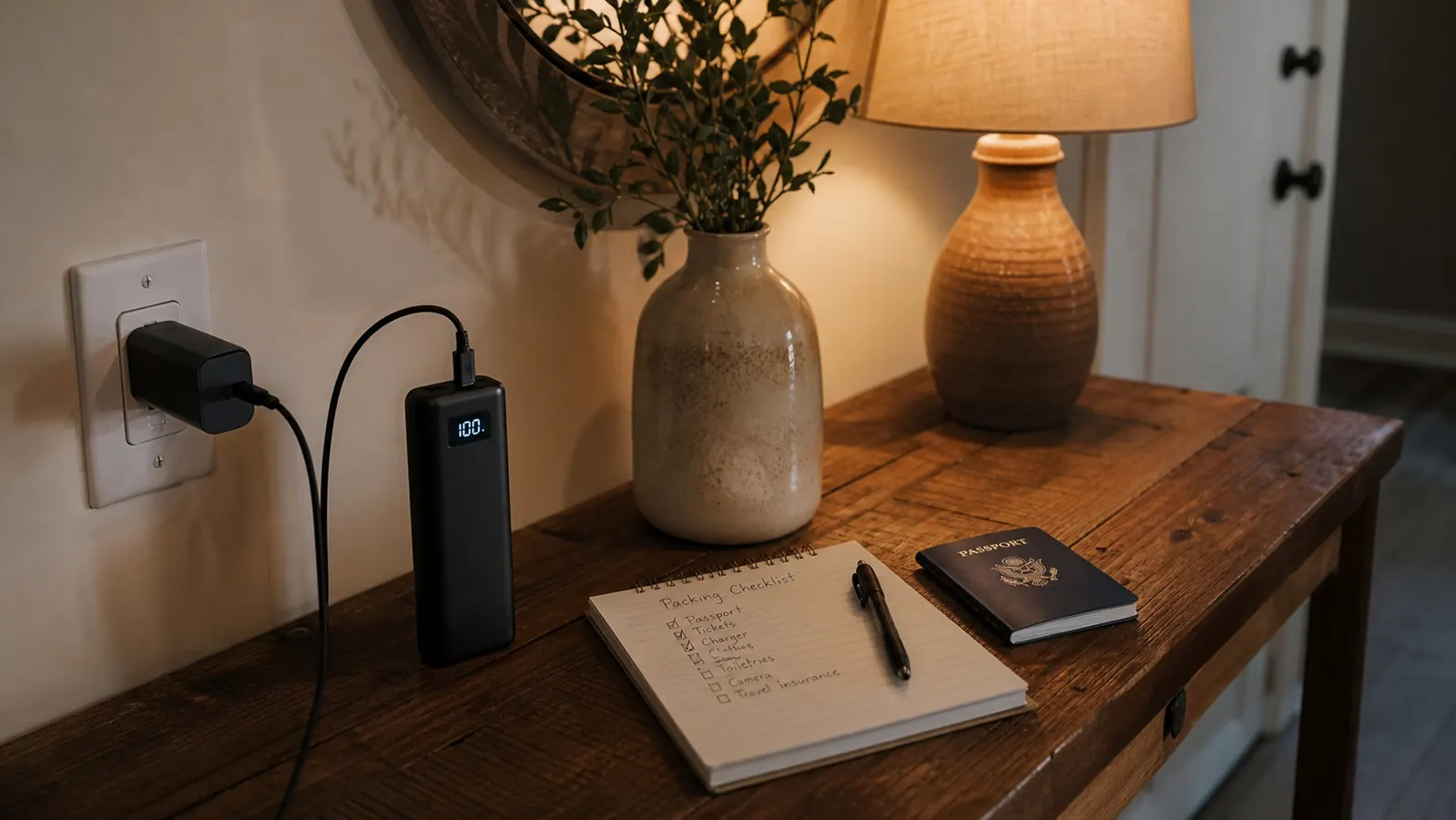
The number that surprised me most had nothing to do with output. It was how long the charger takes to refill itself, something the product page does not state anywhere, not even in the fine print. Plugged into a 45W USB-C PD wall adapter, the same wattage the charger is rated for on output, a full refill from 0% to 100% took 1 hour and 42 minutes. That is a reasonable number for a 10,000mAh cell, and it is faster than most chargers in this size class.
Plug it into an older 18W wall adapter, the kind that shipped with phones for the better part of a decade and that a lot of people still have sitting in a kitchen drawer, and that same refill stretched to 3 hours and 55 minutes, more than double the time. The charger did nothing wrong in either test. It simply cannot pull more power than the wall adapter is willing to give it, and nothing about the packaging warns a buyer that the fast recharge time on the box assumes a wall adapter most people do not already own. If you are packing this for a trip and expect to top it off overnight using whatever charger came with an old phone, plan on it taking most of the night, not ninety minutes.
The Wall Charger You Already Own Might Be the Problem
The same wattage trap applies on the output side, and it is worth separating from the refill numbers because it affects the phone charging speed people actually notice day to day. With a 45W-capable USB-C cable and a phone that supports USB Power Delivery, the charger held close to its rated output through a 20 to 80 percent charge. Swap in a basic USB-A to USB-C cable instead of the USB-C to USB-C cable it ships with, and the meter showed the charging session drop to roughly half the wattage for the entire session, not because the charger changed anything, but because USB-A physically cannot carry the same power delivery protocol that unlocks the higher wattage.
This is the part most portable charger reviews skip, because it makes the review more complicated to write, not because it does not matter. A 45W charger paired with the wrong cable behaves like a 20W charger, and a shopper who blames slow charging on the power bank is usually blaming the wrong part of the chain. Keep the cable it ships with, or replace it only with another cable explicitly rated for USB-C Power Delivery at 45W or higher, and the charger performs the way the box says it will.
Pass-Through Charging Works, With a Catch
One feature the listing mentions in passing but does not explain well is pass-through charging, the ability to charge a phone from the power bank while the power bank itself is plugged into the wall. I tested this specifically because it is the kind of feature that sounds good in a bullet point and disappoints in practice on cheaper units. Across five separate attempts it worked reliably, refilling the bank while simultaneously feeding a phone, without the charger overheating or cutting output the way a couple of older power banks I have owned did under the same test.
The catch is speed. Running pass-through mode split the available wattage between refilling itself and charging the phone, so both processes slowed down compared to doing either one on its own. That is normal behavior for a power bank at this price and not a defect, but it is worth knowing before you plan on using it as an overnight hub that fully charges both itself and a phone by morning. Budget extra time, or do one job at a time if you are in a hurry.
Where the Honest Review Gets Less Flattering
None of the numbers above are complaints, they are just the parts of the spec sheet that need translating. The genuine downsides showed up over five weeks of testing too. The charger runs noticeably warm during a 45W output session, warm enough that I would not want it sitting directly against my body in a pocket during a fast charge, though it never got hot enough to trigger any kind of shutoff. The included cable, while fine for charging, is short, around 8 inches, which is convenient for packing but means you are usually holding the phone and the charger close together rather than setting one down and using the other from across a table.
I also want to flag something the long-term side of this review covers in more depth: capacity fades with repeated cycles, and a five-week bench test cannot tell you what that curve looks like after months of real travel use. For that comparison, the six-month daily-use review of this same INIU charger tracks exactly how much of that 74 percent efficiency number holds up after roughly fifty recharge cycles, which is the more useful read if you are trying to decide whether this charger lasts, not just whether it performs honestly out of the box.
What I Liked
- Delivered 7,400mAh of usable output out of its 10,000mAh rating in meter testing, a normal and honest efficiency number for its size
- Full refill in 1 hour 42 minutes on a 45W wall adapter, genuinely fast when paired with the right charger
- Pass-through charging worked reliably across five test attempts without overheating or cutting output
- Held close to its full 45W rated output with the included USB-C to USB-C cable and a Power Delivery phone
- Small enough that both a bench test and daily carry fit it into a normal travel routine without a second thought
Where It Falls Short
- The 10,000mAh rating does not reflect what actually reaches a phone, expect closer to 1.8 to 2 full charges depending on the device
- Refill time more than doubles to nearly 4 hours on an older 18W wall adapter
- Runs noticeably warm during a full-speed 45W charging session
- Included cable is short, around 8 inches, better for packing than for charging across a table
- Pass-through mode splits available wattage, so both the charger and the phone refill slower than doing either alone
The box says 10,000 milliamp hours. The meter said 7,400 reached the phone. Neither number is a lie. One of them is just the one worth knowing before you buy.
Who This Is For
This charger makes sense for anyone who wants the real numbers before they buy rather than trusting a bullet point, and who already owns, or is willing to buy, a wall adapter that actually supports 45W USB-C Power Delivery so the fast-charge claim means something. It suits a traveler who packs light and would rather carry a compact 10,000mAh unit that delivers close to two honest phone charges than a bulkier bank chasing a bigger number on the box. If you want to see how these same efficiency numbers play out after months of real travel instead of a five-week bench test, the fuller story of switching to this charger after years of unreliable ones covers that ground in more personal terms.
Who Should Skip It
Skip it if you are still using an old 18W wall adapter with no plans to upgrade, since you will lose most of what makes the 45W rating worth paying for and end up with a charger that refills about as slowly as one from a decade ago. It is also not the pick for anyone who read '10,000mAh' and expected it to mean two and a half or three full phone charges, since the real number, once voltage conversion and normal losses are accounted for, sits closer to one and a half to two. And if pass-through charging speed matters more to you than portability, a larger bank built specifically for that use case will serve you better than this one.
Ready to stop guessing what a power bank's spec sheet actually means?
This is the same INIU 10,000mAh, 45W charger tested with a power meter in this review. See today's price and check current stock on Amazon.
Amazon Check Today's Price on Amazon →